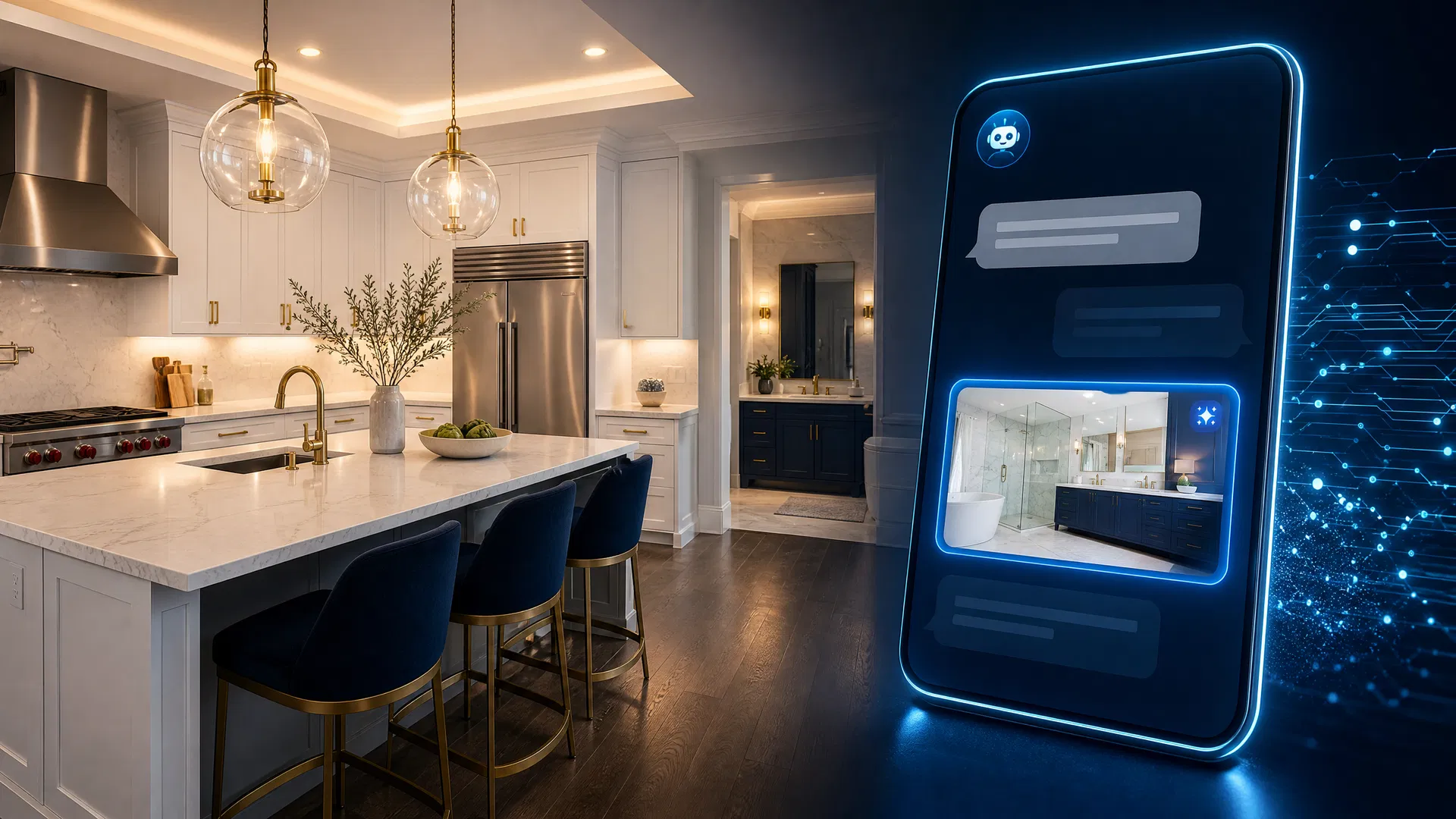
If you’ve been pouring your marketing budget into Google and Meta, it’s time to pay attention to a new channel: ChatGPT Ads. OpenAI has opened up advertising inside ChatGPT itself, and it’s already reshaping how homeowners discover contractors — including kitchen and bath remodeling companies. Here’s what you need to know, and how it can turn into a steady stream of qualified renovation leads.
ChatGPT Ads are sponsored placements that appear alongside ChatGPT’s conversational responses. They show up as clearly labeled sponsored content, visually separated from the AI-generated answer, so users always know what’s organic and what’s paid.
The concept is simple but powerful: instead of showing up next to a list of blue links (like Google) or in a passive social feed (like Meta), your ad appears the moment someone is actively working through a decision in conversation with an AI. Picture a homeowner typing something like “I’m renovating my 1990s bathroom and want a walk-in shower, what should I budget?” — that’s exactly the kind of high-intent moment where your remodeling company can now show up.
OpenAI began testing this in February 2026, when it officially commenced testing of sponsored placements within ChatGPT for Free and Go tier users in the United States. By May, the ChatGPT Ads Manager opened to all US advertisers with no minimum spend, letting businesses create an account, set up campaigns with CPC or CPM bidding, and launch ads without an agency or a six-figure commitment. That’s a massive shift — earlier versions of the program required enterprise-level budgets, but now a local remodeling company can compete for the same visibility as a national brand.
It’s also worth noting who actually sees these ads: only users on the ChatGPT Free or Go tiers can be served ads — ChatGPT does not show ads to Plus, Pro, Business, Enterprise, or Education subscribers. In practice, that means your ads are reaching everyday consumers doing personal research — homeowners, not enterprise software buyers — which lines up well with residential remodeling.
Homeowners increasingly use ChatGPT the way they used to use Google: to ask questions, compare options, and figure out what a project should cost before they ever call a contractor. OpenAI reports processing 2.5 billion daily prompts, and the behavioral shift is real — users are increasingly resolving queries inside conversational AI rather than clicking through search engine results pages.
That shift matters because remodeling is a research-heavy, high-consideration purchase. Someone planning a kitchen remodel doesn’t make one search and pull the trigger — they ask dozens of questions over weeks: cabinet styles, countertop materials, permit requirements, typical costs in their area, how long a renovation takes. Every one of those conversational moments is a potential touchpoint for your ad to appear, positioning your company right at the point of decision-making rather than after the fact.
Unlike Google Ads, ChatGPT Ads don’t run on exact-match keywords. Instead, they use something called context hints — plain-language descriptions of the conversations you want your ad to appear in. Context hints are short phrases that describe the types of conversations where you want your ad to appear. They are not keywords — you’re describing a real user situation in plain language, and OpenAI’s system uses those descriptions as interpretive guides to match your ad to relevant conversations. The matching system is broad and contextual, not exact-match, so hints should be written the way your customer would describe their problem, not the way a keyword tool would express it.
For a remodeling company, that means a good context hint reads less like “kitchen remodel cost” and more like “homeowner asking how much a mid-range kitchen renovation costs in their city” or “homeowner comparing quartz vs. granite countertops for a bathroom remodel.”
Getting started is more approachable than most people expect. You sign in with an existing OpenAI account or create a new one at ads.openai.com, then complete onboarding and verification, add an advertiser name and favicon, set up a billing profile, add a payment method, and invite team members.
Once your account is live, ChatGPT Ads Manager follows a three-tier structure that will feel familiar if you’ve run Google or Meta campaigns before — with one important twist.
This is the top level, where you set your objective, budget, dates, and country targeting. For a remodeling business, this is where you’d separate “Kitchen Remodeling” from “Bathroom Remodeling,” or split by campaign goal (brand awareness vs. lead generation).
Inside each campaign, you build ad groups organized around a specific theme or customer intent. This is where your context hints live. A smart structure might include ad groups like:
Each ad group should have its own set of conversational hints and, ideally, its own dedicated landing page.
This is the actual creative that shows up in ChatGPT. An ad includes your brand name, logo, title, copy, landing page, and image. Best practice is to launch every ad group with three to five ad variations at minimum so you can quickly see which messaging resonates — “Free In-Home Design Consultation” versus “See Your New Kitchen Before You Commit,” for example.
You can build all of this manually inside the guided flow in Ads Manager, or upload a completed ad schema template via bulk CSV for larger campaigns. For most remodeling companies running one or two active service lines, the guided flow is more than enough to start.
ChatGPT Ads are still early — early enough that the auction hasn’t gotten crowded and costs per click haven’t climbed the way they eventually will as more contractors catch on. Early movers who figure out what works before the auctions mature tend to gain a durable, lasting advantage — a pattern that mirrors what happened in the early years of Google Ads and Facebook Ads. For kitchen and bath remodelers, that means the businesses testing this channel now are positioning themselves to capture homeowner attention before their competitors even know the platform exists.
The opportunity is real, but getting it right takes more than flipping a switch. Context hints need to actually mirror how homeowners talk about their projects. Ad groups need to be structured around the buyer’s journey, not just service categories. Budgets need to be sized correctly so the algorithm has enough data to optimize. And your landing pages need to be built to convert the specific intent that brought someone there.
You focus on delivering beautiful kitchens and baths — let us focus on filling your pipeline. At Tile Marketing Pros, we specialize in digital marketing exclusively for kitchen and bath remodeling companies, and we’re already testing and refining ChatGPT Ads campaigns to get ahead of this shift before it becomes mainstream.
We’ll handle account setup, campaign architecture, context-hint strategy, ad creative, and landing page optimization — all built around the way homeowners actually talk about their remodeling projects.
Ready to get in front of homeowners at the exact moment they’re planning their next renovation? Contact Tile Marketing Pros today for a free consultation and let’s build your ChatGPT Ads strategy together.
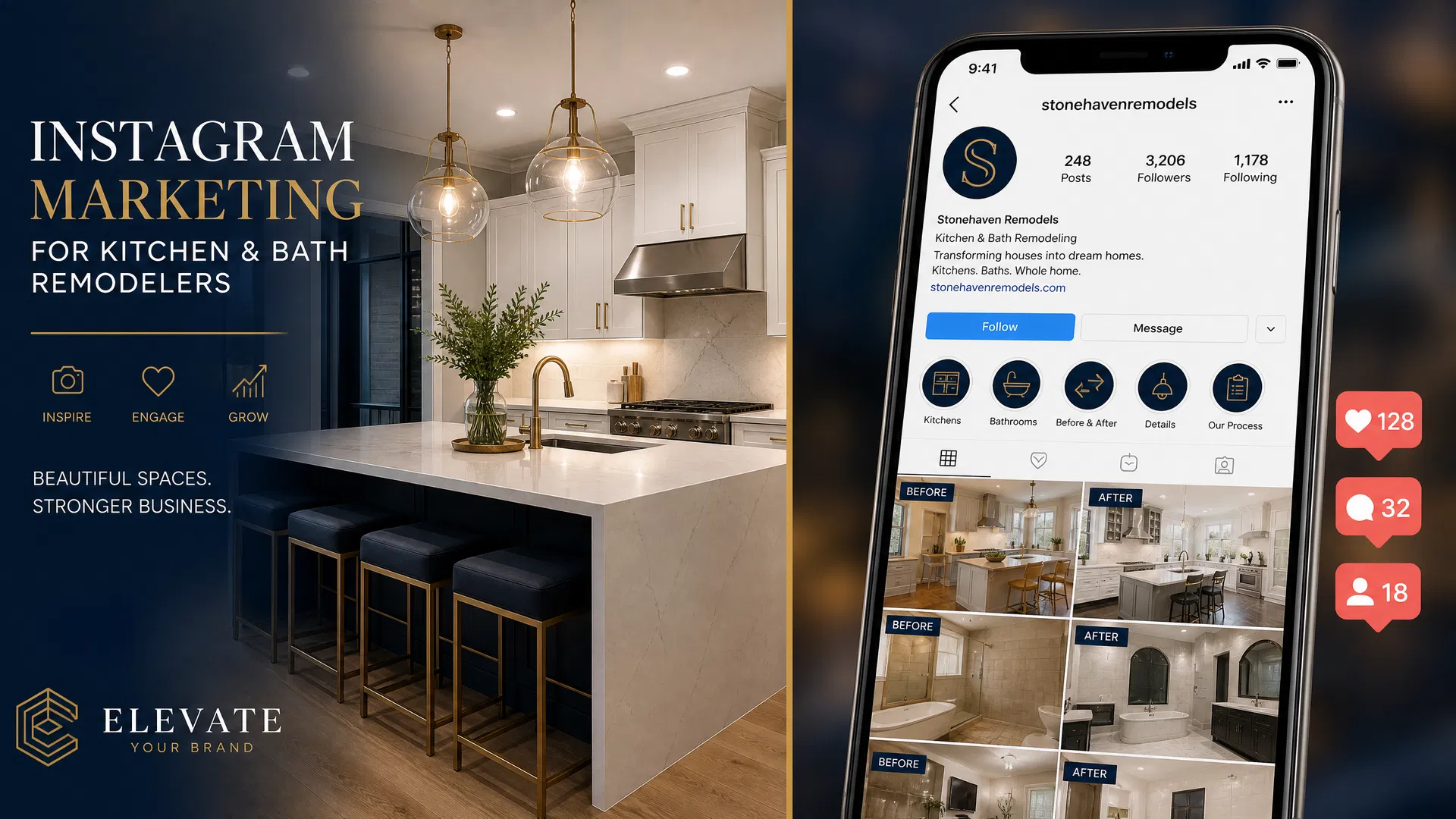
Instagram is one of the most powerful platforms for kitchen and bath remodelers — because your work is inherently visual. Here's how to turn your project photos into a steady stream of leads.

Most remodeling contractors either underspend on marketing and wonder why the phone isn't ringing, or overspend on the wrong channels. Here's how to set a budget that actually produces results.
Get a free audit of your current online presence and a custom growth plan for your market.
Get My Free Growth AuditGet your free lead audit — we'll show you exactly how many leads your competitors are getting that should be going to you.
We've received your request and will reach out shortly!